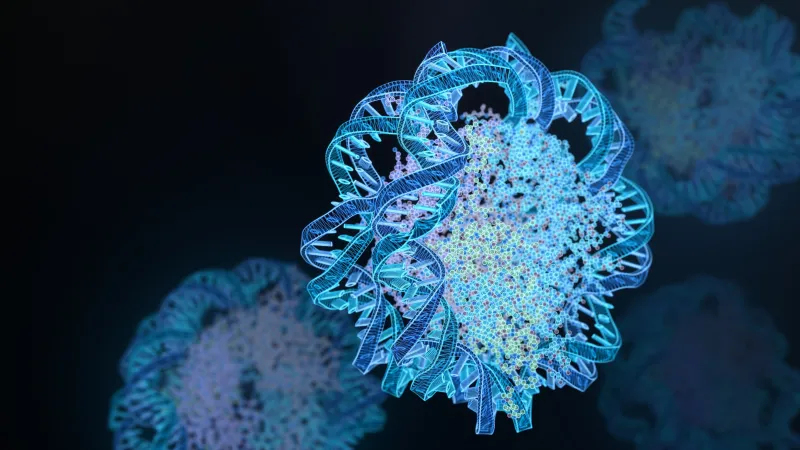
Researchers at The Ohio State University have discovered how a crucial protein involved in gene regulation reaches its target within the genome. Using single-molecule techniques, the team found that linker histone H1, which helps keep unused genes switched off, moves erratically along DNA and struggles to bind nucleosomes without assistance from specialized chaperone proteins.
Published in Molecular Cell, the study provides new insight into how cells maintain control over gene expression and could help researchers better understand diseases linked to gene regulation defects.

“Many proteins are dynamic, and the way you get at mechanistic dynamic information is by doing these single-molecule studies where you literally can watch in real timewhat individual molecules are doing”
— Michael Poirier, Professor of Physics at The Ohio State University.
The findings open new opportunities to investigate how cancer-related mutations and other alterations affect H1 function and genome organization.