DQS-CP
Program Summary
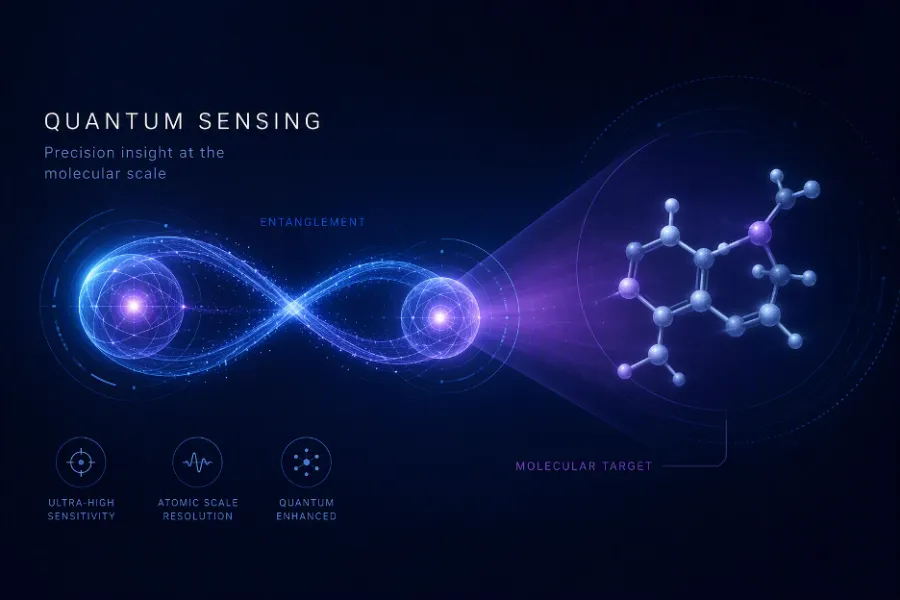
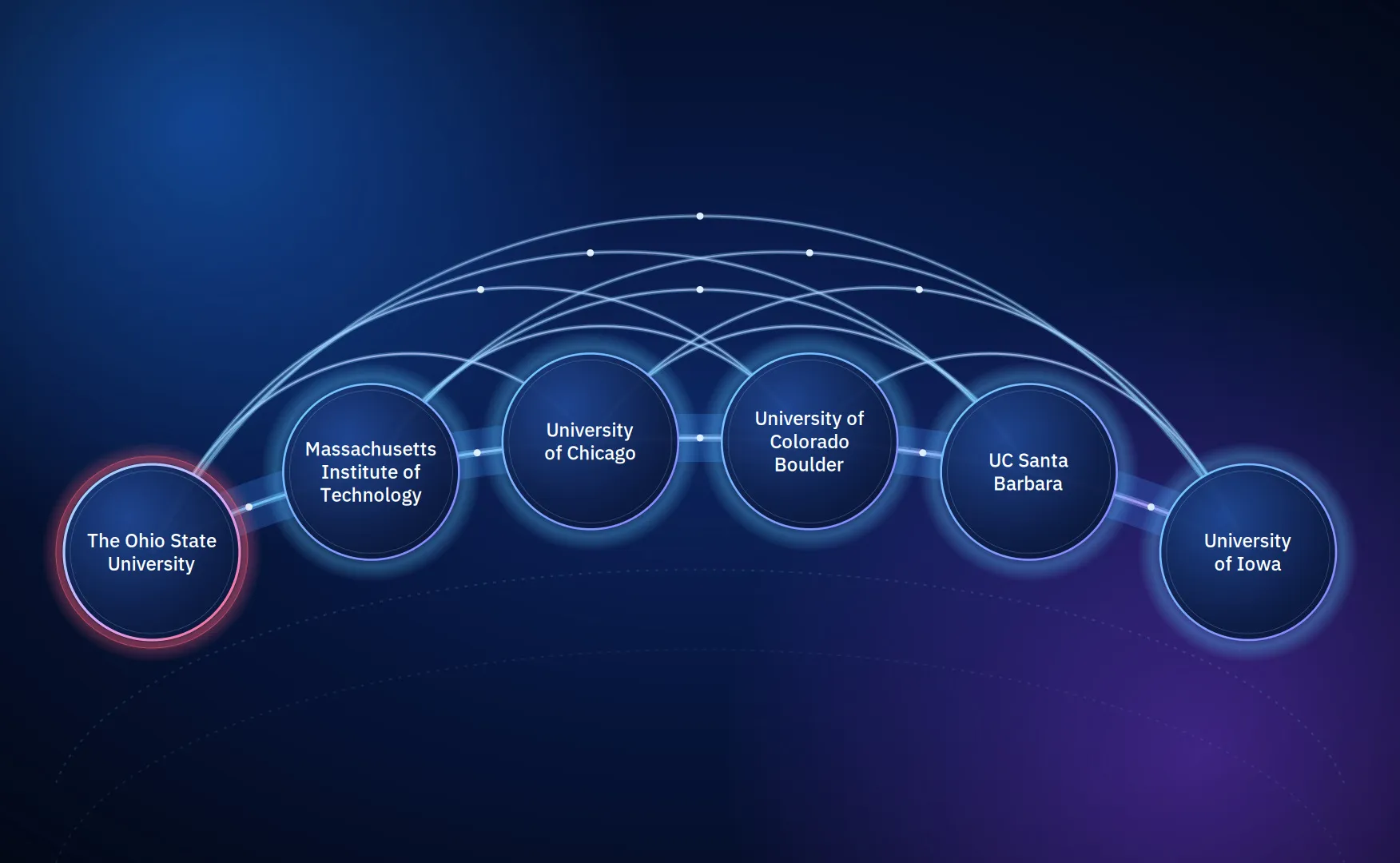
DQS-CP is a multi-institution research testbed developing quantum sensing technologies for chemistry and materials science.
Supported by NSF's National Quantum Virtual Laboratory program and co-funded by NSF's Directorate for Biological Sciences, the program brings together researchers, engineers, and future instrument users to determine where quantum sensing can deliver meaningful scientific benefit.
Our goal is simple but demanding: demonstrate, with quantitative experimental evidence, when quantum advantage is real for molecular and solid-state measurements and when it is not. We then provide those solutions to the quantum community.
Mission
- Establish measurable performance benchmarks for quantum sensing.
- Determine where quantum methods outperform conventional approaches.
- Identify the practical limits of quantum-enabled measurements.
- Generate the technical foundation for deployable research instruments.
A Modular Sensor Architecture
Every sensing platform in DQS-CP can be viewed as three connected components:
Target
- The molecular or solid-state system being measured.
Spin Relay Layer
- A molecular or materials-based interface that couples to the target and carries information away from it.
Quantum Readout
- A quantum system that converts the signal into data that can be recorded by conventional instruments.
Target → Spin Relay Layer → Quantum Readout
- This modular framework allows different sensing approaches to be evaluated within a common architecture.
Research Areas
Key research efforts include:
- Molecular qubits designed specifically for sensing applications.
- Solid-state quantum sensing platforms.
- Spin-relay engineering and information transfer.
- Entanglement-enabled sensing strategies.
- Quantum-enhanced measurements that push beyond the Standard Quantum Limit.
Because the sensor's electronic and magnetic structure determines what can ultimately be measured, designing and optimizing these components is central to improving sensitivity and performance.
A Multi-Institution Testbed
DQS-CP is structured around collaborative co-design:
- Institutions contribute expertise at different points in the sensor architecture.
- Researchers, engineers, and future instrument users work together throughout development.
- Common testbed frameworks enable comparison across technologies.
- Modularity allows new sensing approaches to be incorporated as the field evolves.
This approach helps transform promising laboratory demonstrations into tools that can be broadly adopted by the research community.
Phase 2 Objectives
Advance Multiple Sensing Modalities
Several sensing approaches are being developed in parallel across the consortium, each combining different target systems, spin-relay strategies, and quantum readout technologies.
Design Deployable Instruments
Experimental results are simultaneously translated into:
- Instrument requirements
- Performance specifications
- Cost bases
- Vendor-ready design packages
The objective is to define instruments that could be used by researchers beyond the laboratories where they were originally developed.
Near-Term Sensing Targets
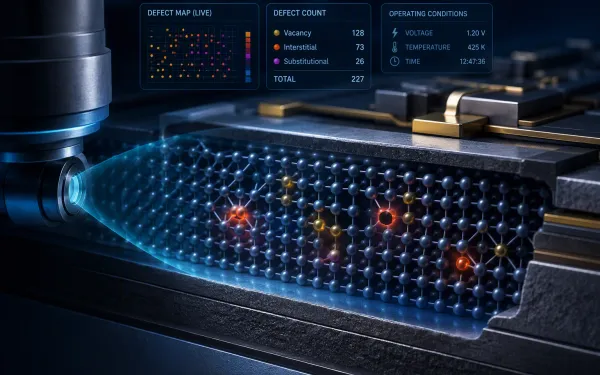
In Situ Defect Monitoring
Finding and counting atomic-scale defects inside semiconductor devices and nuclear materials while they are operating. Conventional characterization means taking the device apart first.
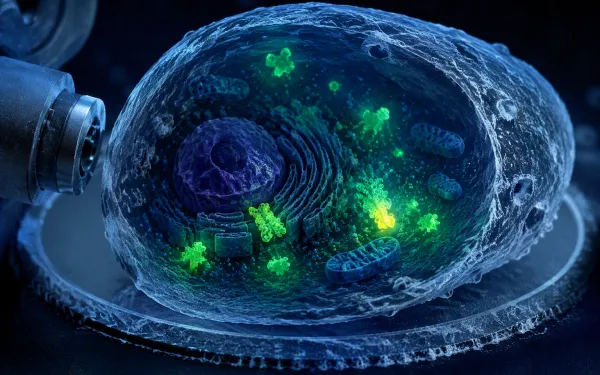
Cellular Processes
Detecting biochemical activity inside intact cells, using sample preparation borrowed from cryo-electron microscopy and fluorescent protein probes as the sensing layer.
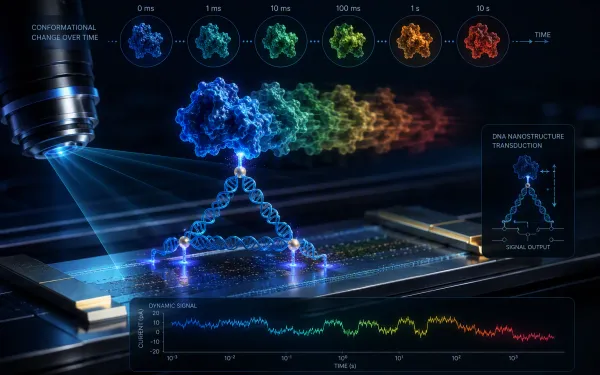
Biomolecular Dynamics
Following how single biomolecules move and change shape, across timescales, with DNA nanostructures handling the transduction.
Near-Term Sensing Targets
In Situ Defect Monitoring
Finding and counting atomic-scale defects inside semiconductor devices and nuclear materials while they are operating. Conventional characterization means taking the device apart first.
Cellular Processes
Detecting biochemical activity inside intact cells, using sample preparation borrowed from cryo-electron microscopy and fluorescent protein probes as the sensing layer.
Biomolecular Dynamics
Following how single biomolecules move and change shape, across timescales, with DNA nanostructures handling the transduction.
Program Partners
Program Status
DQS-CP is in NSF NQVL Phase 2 (Design), building toward a Phase 3 implementation proposal. Current status and milestones: Current Phase and Program Status.
NSF & Program Context
DQS-CP is funded by NSF Award 2547444 through the National Quantum Virtual Laboratory and jointly supported by NSF's Directorate for Biological Sciences.
The NQVL was established under the National Quantum Initiative Act to move quantum science out of the research lab and into working instruments.