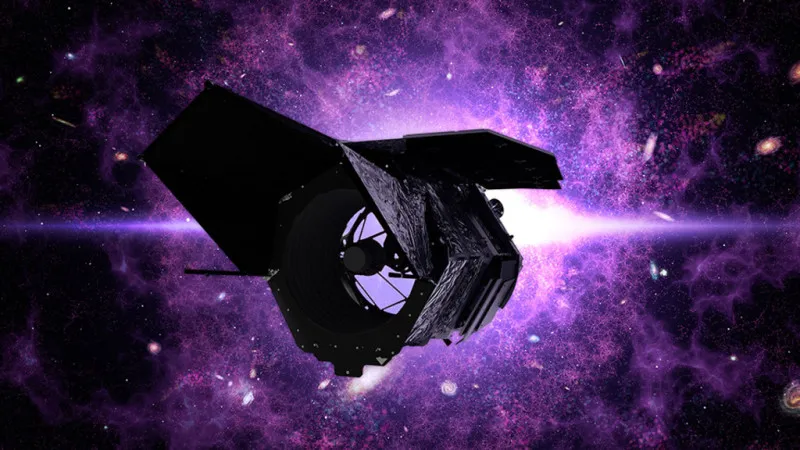
More than two dozen researchers from The Ohio State University have contributed to NASA's Nancy Grace Roman Space Telescope, a next-generation observatory designed to study dark energy, dark matter, exoplanets, and the evolution of the universe. With a field of view far larger than previous space telescopes, Roman will survey hundreds of millions of galaxies and map the cosmos with unprecedented speed and precision.
The mission is expected to help answer some of astronomy's biggest questions, from the nature of dark energy to the abundance of potentially habitable worlds beyond our solar system. The telescope's first science results are anticipated in 2027.
"Roman is going to allow us to find extremely rare things and things that don't happen very often. It's going to be those things that are likely going to surprise us and lead to new avenues of research"
— Scott Gaudi, professor of astronomy at The Ohio State University.
The Ohio State University researchers have helped develop key survey programs and scientific tools that will enable the global astronomy community to analyze Roman's enormous datasets for years to come.
"Roman's technology will have a huge influence on the future of space science. From launch onward, it's going to be spectacular" — Christopher Hirata, professor of physics at The Ohio State University.
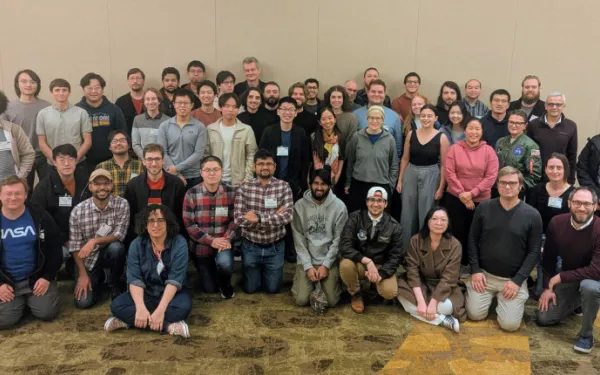
Members of the Roman High Latitude Imaging Survey Cosmology Project Infrastructure Team.
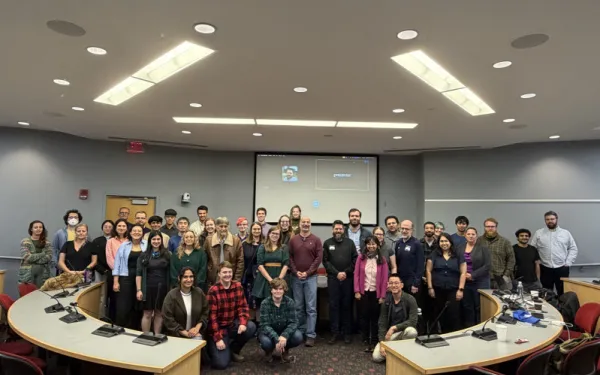
Members of the Roman Galactic Exoplanet Survey Project Infrastructure Team and the Transiting Exoplanets in the Roman Galactic Exoplanet Survey (TRExS) team.
Members of the Roman High Latitude Imaging Survey Cosmology Project Infrastructure Team.
Members of the Roman Galactic Exoplanet Survey Project Infrastructure Team and the Transiting Exoplanets in the Roman Galactic Exoplanet Survey (TRExS) team.